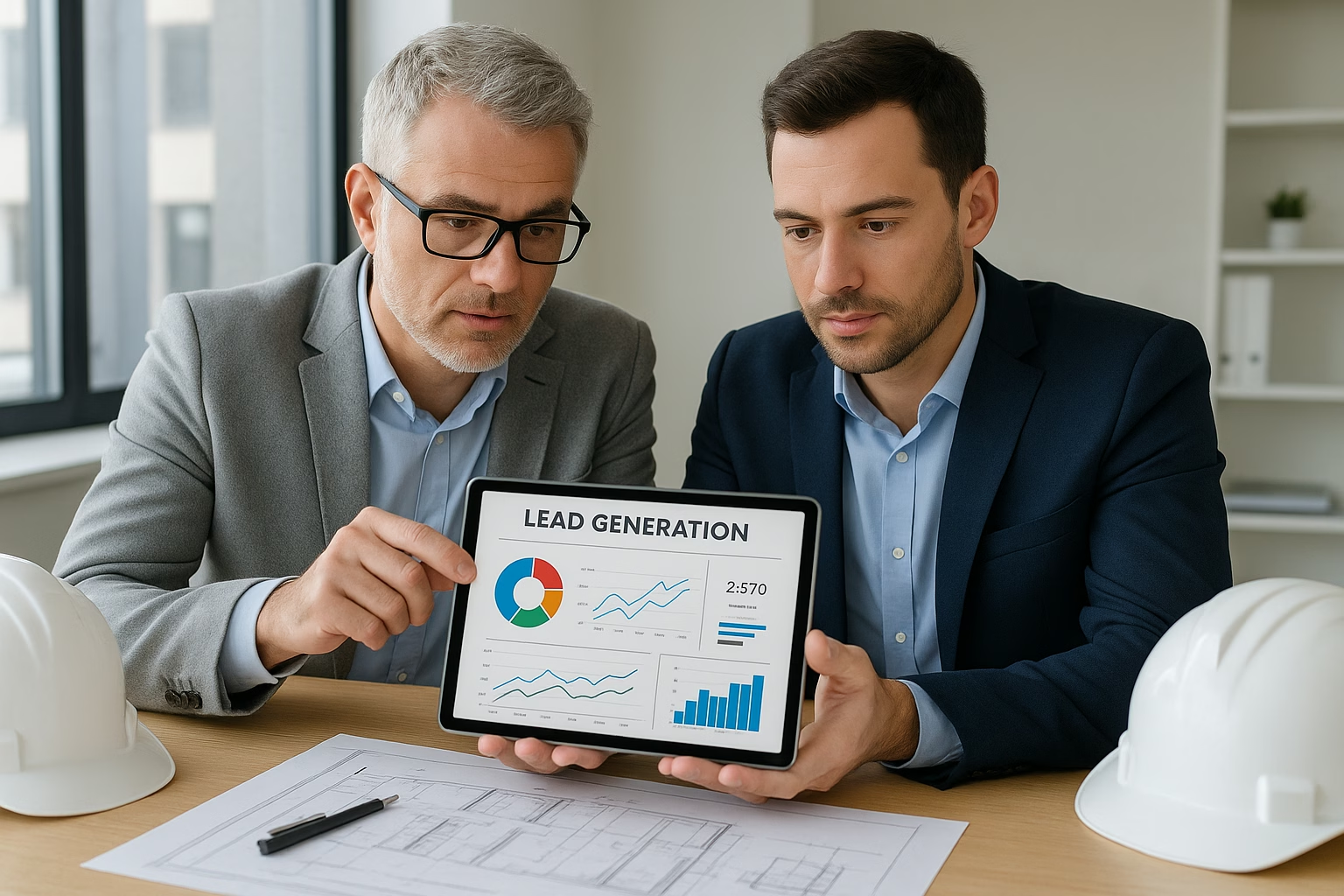
Lead-Generating Video Strategy - youtube optimization specialist remote
To turn YouTube views into qualified architecture leads, focus on intentional video topics, clear CTAs, optimized metadata, and a simple funnel. Use thumbnails and hooks to boost retention, add lead magnets in descriptions, and measure watch time and conversions to refine what attracts design clients.
Why Architects Should Treat YouTube Like a Lead Machine
YouTube is a visual-first platform ideal for architects: project walkthroughs, process videos, and client stories demonstrate capabilities better than static portfolios. When you optimize videos with search-friendly titles, retention-driven content, and clear conversion paths-like a short consultation booking link-you transform casual viewers into qualified leads.
PrimeTime Advantage for Beginner Creators
PrimeTime Media is an AI optimization service that revives old YouTube videos and pre-optimizes new uploads. It continuously monitors your entire library and auto-tests titles, descriptions, and packaging to maximize RPM and subscriber conversion. Unlike legacy toolbars and keyword gadgets (e.g., TubeBuddy, vidIQ, Social Blade style dashboards), PrimeTime acts directly on outcomes-revenue and subs-using live performance signals.
- Continuous monitoring detects decays early and revives them with tested title/thumbnail/description updates.
- Revenue-share model (50/50 on incremental lift) eliminates upfront risk and aligns incentives.
- Optimization focuses on decision-stage intent and retention-not raw keyword stuffing-so RPM and subs rise together.
👉 Maximize Revenue from Your Existing Content Library. Learn more about optimization services: primetime.media
What to Prioritize First
- Audience-fit topics: Speak to homeowners, developers, or commercial clients with dedicated playlists.
- Retention over length: Aim for a strong 15-60 second hook and a promised takeaway to keep watch time high.
- Conversion-ready assets: Lead magnet (checklist, layout PDF) + calendly or contact link in description.
7-10 Step Repeatable Content-to-Conversion Framework
- Step 1: Identify 3 client personas (homeowner, developer, renovation seeker) and list 5 questions they ask.
- Step 2: Plan 3 video types per persona-project tour, quick tip, and client case study-to form a mini-series.
- Step 3: Craft SEO titles and descriptions using target keywords and short, benefit-driven phrases from persona questions.
- Step 4: Design thumbnails with a bold face, single benefit line, and consistent color to build recognition.
- Step 5: Start videos with a 15-30 second hook that promises a result and teases the lead magnet to boost retention.
- Step 6: Place a clear CTA at 50-70% of the video (mid-roll) and again at the end: “Download the layout checklist” or “Book a free consult.”
- Step 7: Use pinned comment and description to include a short link to your lead magnet, contact form, and a timestamped value list.
- Step 8: Create playlists for each persona so binge-watching raises session time and signals strong relevance to YouTube’s algorithm.
- Step 9: Review analytics weekly: watch time, audience retention, click-through rate on thumbnails, and conversion links from the description.
- Step 10: Iterate: double down on topics that bring watch time and clicks; drop formats that fail to convert and A/B test thumbnails and CTAs.
Thumbnail Design and Retention Tactics
Thumbnails and the first 10 seconds determine whether viewers stick around. Use high-contrast portraits, a short benefit phrase, and framing that signals architecture (plans, models, finished spaces). Pair that with a hook: a surprising stat, a bold promise, or a revealed transformation. This increases watch-time which fuels recommendations.
Video SEO and Metadata Best Practices
Optimize for discovery by putting primary keywords in the first 60 characters of the title and in the first 1-2 sentences of the description. Use 5-8 relevant tags, choose a specific category, and add chapters (timestamps) so viewers can navigate. For more on metadata and best practices, see YouTube Creator Academy and the YouTube Help Center.
Playlists, Funnels, and Lead Magnets
Structure playlists to serve conscious viewers: awareness → consideration → decision. Each playlist should lead to a conversion asset: downloadable case study, budget checklist, or a booking link. For funnel design and automation, check PrimeTime Media’s resources like Optimize Your YouTube Funnel for Architects and automation insights in API driven video automation for Beginners.
Analytics Checkpoints for Lead-Quality
- Impressions click-through rate (CTR): Good thumbnails drive CTR; aim for 4%+ depending on niche.
- Average view duration and retention curve: Watch for drop-off at key moments and improve hooks.
- Conversion clicks: Track link clicks using UTM parameters to measure source-to-lead.
How to Use CTAs Without Turning Off Designers
Use subtle value-first CTAs: “Grab the free schematic checklist,” “See time- and cost-saving layout tips,” and “Book a 15-minute portfolio review.” Place the CTA where it feels natural-after delivering value-and make the next step low-commitment. Link to a branded landing page, not a direct email address, for better tracking.
Beginner FAQs
How long should my architecture videos be to get leads?
Aim for 6-12 minutes for project tours and 2-5 minutes for quick tips. Longer videos can work if content sustains interest-use chapters and engaging visuals. Focus on retention rather than raw length; higher average view duration signals relevance and boosts discovery, leading to more qualified lead visits.
What’s the best place to add a lead magnet link?
Place the lead magnet in the description’s first two lines, add a pinned comment with the short link, and mention it mid-video and at the end. Use UTM parameters to track clicks and a dedicated landing page to collect lead details without forcing a heavy commitment from potential clients.
Do I need a professional camera to start getting leads?
No-modern phones can capture excellent footage. Focus first on framing, lighting, clear audio, and informative storytelling. Upgrade gear after you validate topics that convert. Invest time in editing, thumbnails, and SEO first; production value enhances credibility but is secondary to content that attracts and converts.
🎯 Key Takeaways
- Master Optimize Your YouTube Channel - Lead-Generating Video Strate basics for YouTube Growth
- Avoid common mistakes
- Build strong foundation
⚠️ Common Mistakes & How to Fix Them
Lead-Generating Video Strategy - youtube optimization specialist remote
Optimize your YouTube channel to convert architecture-focused viewers into qualified leads by aligning content formats, retention-first editing, and conversion touchpoints. Use data-driven thumbnails, playlists, and CTAs, plus analytics checkpoints to iterate. PrimeTime Media helps architecture creators implement this system and book qualified client calls-request a strategy review today.
Why this matters for architects
Architectural projects are high-consideration purchases where clients evaluate portfolios, process, and fit. YouTube is the ideal medium to demonstrate design thinking, case studies, construction sequencing, and firm personality. Converting views into leads requires a repeatable content-to-conversion framework: attract with discovery SEO, retain with value-driven storytelling, and convert with clear lead magnets and contact flows.
Tools and team roles
Essential tools: TubeBuddy or VidIQ for keyword and thumbnail testing, Google Analytics and Google Tag Manager for tracking, a scheduling tool (Calendly), and an email automation stack (Mailchimp, ConvertKit). For scale, add a dedicated youtube optimization specialist or a remote freelance editor to handle production cadence and optimization tasks.
- Role: Editor - ensures pacing and retention-focused cuts.
- Role: Optimization specialist - runs A/B thumbnail tests, metadata, and playlists.
- Role: Growth manager - manages cross-platform promotion and lead capture.
Where to learn official best practices
Follow YouTube's own resources for algorithm and policy guidance, and consult broader social marketing research for trends.
- YouTube Creator Academy - official best practices for creators.
- YouTube Help Center - community guidelines and platform rules.
- Think with Google - insights on audience behavior and ad trends.
- Hootsuite Blog - broader social distribution strategies for video.
Related PrimeTime Media resources
For hands-on workshops and funnel blueprints, check these guides tailored to architecture creators:
- YouTube basics for architects - step-by-step workshop - great if you need to solidify fundamentals before scaling.
- Optimize your YouTube funnel for architects - practical funnel templates and landing page examples.
- API-driven video automation for architecture firms - for teams ready to automate publishing and lead routing.
Final checklist to implement this month
- Map 3 content pillars and produce a 5-video plan for each pillar.
- Create two thumbnail variants per upcoming video and run the better performer after initial 48-hour data.
- Build one lead magnet per content pillar and a UTM-tagged landing page.
- Set up analytics tracking for view-to-lead and connect your CRM to track downstream value.
- Schedule a PrimeTime Media channel review to audit thumbnails, metadata, and funnel flow.
Need hands-on help implementing a proven lead-generating system? PrimeTime Media specializes in turning architecture content into booked projects. Request a channel audit and strategy session to get a clear roadmap and a prioritized production plan tailored to your firm.
PrimeTime Advantage for Intermediate Creators
PrimeTime Media is an AI optimization service that revives old YouTube videos and pre-optimizes new uploads. It continuously monitors your entire library and auto-tests titles, descriptions, and packaging to maximize RPM and subscriber conversion. Unlike legacy toolbars and keyword gadgets (e.g., TubeBuddy, vidIQ, Social Blade style dashboards), PrimeTime acts directly on outcomes-revenue and subs-using live performance signals.
- Continuous monitoring detects decays early and revives them with tested title/thumbnail/description updates.
- Revenue-share model (50/50 on incremental lift) eliminates upfront risk and aligns incentives.
- Optimization focuses on decision-stage intent and retention-not raw keyword stuffing-so RPM and subs rise together.
👉 Maximize Revenue from Your Existing Content Library. Learn more about optimization services: primetime.media
Key outcomes to measure
- View-to-lead conversion rate (target 0.5-2% initially for niche B2C/B2B architecture content)
- Average view duration and audience retention (aim for >50% first-minute retention on 6-12 minute videos)
- Click-through rate (CTR) on thumbnails (benchmark 4-10% for niche channels)
- Subscriber growth tied to lead funnel movement (track how many new subs join via lead magnet)
Audience and content positioning
Define 2-3 audience personas (homeowners, developers, interior designers). Map each persona to content pillars such as Portfolio Walkthroughs, Design Process Explainers, Budget and Feasibility, and Behind-the-Scenes Builds. This focused approach improves search relevance and watch history alignment, which YouTube uses to recommend videos.
Video formats that generate leads
- Portfolio Case Studies - 8-15 minutes: show brief client brief, process highlights, before/after, and measurable outcomes.
- How We Designed It - 6-10 minutes: process-driven narrative that educates and demonstrates expertise.
- Client Testimonial Interviews - 4-8 minutes: social proof with short calls-to-action for discovery calls.
- Site Tours / Timelapses - 3-7 minutes: visual proof of build capability and attention to detail.
- Mini Explainers - 2-4 minutes: quick tactical tips that drive subscribers and newsletter signups.
Optimization stack - video-by-video checklist
- Step 1: Keyword research - use a mix of short and long-tail phrases like "modern small house plan", "sustainable home design process", and "architect portfolio review" linked to intent (informational vs. transactional).
- Step 2: Title engineering - include the main keyword early in a compelling title (keep titles concise and clickworthy while avoiding clickbait).
- Step 3: Thumbnail design - use bold typography, a clear subject shot, and a single emotional cue; test two variants with A/B experiments where possible.
- Step 4: Hook and first 15 seconds - present the problem and the outcome; aim to retain 65%+ of viewers through the first 30 seconds.
- Step 5: Structured narrative - use timestamps, chapters, and layered value: teach, show, and close with a conversion opportunity.
- Step 6: Metadata optimization - write a 200-400 word description incorporating primary and secondary keywords, and add 8-12 relevant tags.
- Step 7: End screens and pinned comment CTA - direct viewers to a lead magnet (case study PDF, project checklist) gated behind an email capture or booking link.
- Step 8: Playlists and funneling - group videos into playlists that reflect buyer journey stages (Explore > Consider > Convert) to increase session watch time.
- Step 9: Promotion and re-use - share short clips on Instagram/TikTok with links back to full video, and transcribe videos for SEO on your firm site and LinkedIn.
- Step 10: Analytics checkpoint - measure CTR, average view duration, impression share, and traffic source. Iterate titles/thumbnails based on data every 4-6 videos.
Thumbnail and retention tactics with data
Thumbnails influence CTR and are the first step of conversion. Testing across similar videos can move CTR from 3% to 8% (industry variance). Higher CTRs combined with strong retention signals to YouTube that your content is relevant, which increases impressions and recommended placements.
- Design rule: 3-second legibility - ensure text is readable on mobile thumbnails.
- Use face or subject at 40-60% of frame with 2-3 color contrasts.
- Retention hack: chapter the intro-preview timestamps at 30-45 seconds to encourage skipping to value sections.
Playlists and watch-session optimization
Structure playlists to encourage binge-watching. Playlists improve session watch time-one of YouTube’s top ranking signals. For architecture channels, a playlist titled "Full Project Case Studies" can drive viewers through multiple portfolio pieces, increasing the chance they reach conversion CTAs.
Lead magnets, CTAs, and conversion flows
Design lead magnets that match video intent-if a video is a case study, offer a downloadable "Project Scope Checklist" or "Feasibility Brief Template." CTA placement should follow this pattern: mid-roll soft CTA, pinned comment link, end-screen direct booking link with scheduling tool (Calendly or similar).
- Conversion funnel example: YouTube view → pinned comment lead magnet → landing page with email capture → automated qualification email → booking link.
- Use UTM parameters for every link to attribute leads to specific videos in CRM.
Analytics checkpoints and KPIs
Weekly and monthly checkpoints keep optimization on track.
- Weekly: Impressions, CTR, average view duration for last 5 uploads.
- Monthly: Watch time, subscriber growth, and view-to-lead conversion for the funnel.
- Quarterly: Lead quality - track proposals sent and closed deals attributable to YouTube.
Intermediate FAQs
How do I structure a playlist funnel for architecture clients?
Create three playlists mapping to buyer intent: "Inspiration" (high-level projects), "Process" (how you design), and "Client Steps" (how to work with us). Order videos inside playlists to move viewers from discovery to consideration and include links to lead magnets in each video's description and pinned comment.
What’s a realistic timeline to see leads from YouTube?
Expect 3-6 months to gather meaningful data on content performance and lead flow. With consistent uploads and optimization, some architects begin receiving qualified discovery calls within 90 days, but reliable conversion rates improve as you refine thumbnails, retention, and targeted lead magnets.
Which video length converts best for architecture content?
6-12 minute videos balance depth and retention for case studies and process videos. Shorter 2-4 minute explainers work well for top-of-funnel discovery. Prioritize retention: a longer video that keeps 50%+ average view duration outperforms a shorter video with rapid drop-off.
How should I track which videos drive the highest quality leads?
Use UTM-tagged landing pages for each lead magnet and connect form submissions to your CRM. Track lead source, video ID, and campaign. Evaluate leads by conversion milestones like RFP requests, proposals, and closed projects to determine ROI by video or series.
🎯 Key Takeaways
- Scale Optimize Your YouTube Channel - Lead-Generating Video Strate in your YouTube Growth practice
- Advanced optimization
- Proven strategies
⚠️ Common Mistakes & How to Fix Them
Lead-Generating Video-youtube optimization specialist remote
Optimize Your YouTube Channel into a predictable lead engine for architecture clients by pairing disciplined video SEO, high-retention creative hooks, and conversion-first funnels. This guide gives advanced optimization and scaling tactics-playlists, metadata microtests, analytics checkpoints, CTA placement, and automation-to convert views into qualified leads for modern architecture creators.
Why this matters for architects on YouTube
Architectural services are high-consideration purchases: decision timelines are long, and clients need proof of expertise. YouTube offers the richest format to showcase process, portfolio, and personality. Advanced creators transform episodic content into repeatable funnels that surface intent signals and route hot leads into consultations.
What metrics should I prioritize to measure lead performance from videos?
Prioritize conversion metrics over raw views: video CTR to primary CTA, lead magnet conversion rate, consult booking rate per video, and cost per booked consult. Track average view duration and watch percentage as secondary signals that predict conversion performance from a specific asset.
How can I scale metadata testing without ruining SEO stability?
Run short, rolling microtests on thumbnails and titles for similar assets, limit changes to one variable at a time, and monitor CTR and early watch-time. Lock winning variants for two to four weeks, then promote winners via ads to maintain search momentum while expanding reach.
When should I hire a youtube optimization specialist remote versus train internally?
Hire remote specialists when you need immediate scale in metadata experimentation, analytics wiring, and ad funnel optimization. Train internally if you have stable output and a single creative lead. Hybrid models work best: retain creative control in-house and outsource technical optimization.
Which content formats convert best for architecture consults?
Conversion-focused formats: site assessment walk-throughs, permit problem-solution case studies, budget breakdowns, and compact consult teasers that preview what a paid consult delivers. Each should map to a tailored lead magnet to capture intent without friction.
How do I attribute consults to a specific YouTube video reliably?
Use unique UTM-tagged landing pages or one-click booking links for each video, capture the video source on signups, and integrate that data into your CRM. Combine UTM attribution with first-touch and last-touch analysis to evaluate each video's role in conversion paths.
Next steps and CTA
Ready to convert your architecture channel into a lead engine? Start with a technical audit and a 90-day content-to-conversion sprint. PrimeTime Media offers channel audits, SOPs for batch production, and automation setups to scale leads reliably. Request an audit and roadmap from PrimeTime Media to get a tailored plan for your firm.
Further reading: explore core playbooks like YouTube basics for architects and the YouTube optimization cheat sheet for designers to align tactical execution with this advanced funnel.
PrimeTime Advantage for Advanced Creators
PrimeTime Media is an AI optimization service that revives old YouTube videos and pre-optimizes new uploads. It continuously monitors your entire library and auto-tests titles, descriptions, and packaging to maximize RPM and subscriber conversion. Unlike legacy toolbars and keyword gadgets (e.g., TubeBuddy, vidIQ, Social Blade style dashboards), PrimeTime acts directly on outcomes-revenue and subs-using live performance signals.
- Continuous monitoring detects decays early and revives them with tested title/thumbnail/description updates.
- Revenue-share model (50/50 on incremental lift) eliminates upfront risk and aligns incentives.
- Optimization focuses on decision-stage intent and retention-not raw keyword stuffing-so RPM and subs rise together.
👉 Maximize Revenue from Your Existing Content Library. Learn more about optimization services: primetime.media
Core outcomes you should aim for
- Steady pipeline of qualified discovery calls per month tied to specific video assets.
- Increased average view duration and clickthrough on lead magnets that predict conversion.
- Automated routing: video → lead magnet → nurture sequence → scheduled consult.
- Data-driven content calendar that prioritizes videos that predict consult volume.
Advanced optimization framework for architects
This framework turns passive views into measurable, repeatable lead outcomes. Implement each layer and track the signal improvements (CTR, average view duration, page visits, conversions) across cohorts.
1. Intent-first topic selection
Prioritize topics that match stages of the buyer journey: Inspiration (portfolio tours), Evaluation (process deep dives, breakdowns), and Conversion (pricing frameworks, how to work with us). Use search intent mapping-YouTube search, Google Discover, and competitor research-to rank topics by estimated lead propensity and search volume.
2. Hook + Value-first scripts for retention
Open each video with a 5-12 second promise tied to viewer intent. For architects: show a dramatic before/after, a real client outcome, or a timelapse of a transformation. Anchor the promise to an explicit next step (lead magnet or consult link) and maintain a "lesson per minute" cadence to preserve audience attention and signal value to the algorithm.
3. Thumbnail and title microtests
Run systematic A/B thumbnail and title experiments using YouTube’s impressions/CTR data. For architecture, compare portfolio closeups versus project-wide context images. Test text overlays that emphasize outcome (e.g., "From Wreck to Workable 3-Bed Plan") versus process (e.g., "How We Solved Zoning for Tight Lots").
4. Metadata that signals conversions
Write long-form descriptions with structured sections: TL;DR, timestamps, value bullets, client outcomes, and a single primary CTA link (use UTM). Use a 1-2 sentence keyword-rich top description to match search intent and include 5-8 targeted tags not generic ones. Prefer primary keyphrase early in title and description.
5. Playlists as funnel stages
Use playlists to guide users through evaluation steps: “Portfolio: Modern Homes,” “Process: From Concept to Permit,” and “Consultation: Book a Design Review.” Set playlist order to create sequential viewing paths and use playlist descriptions with CTAs pointing to lead magnets or consult booking pages.
6. Lead magnets that match video intent
Match lead magnets to the video stage: design templates or permit checklists for evaluation viewers; budget calculators and site assessment forms for conversion-stage viewers. Gate items behind a simple, low-friction form and deliver via email automation with UTM tracking back to the original video.
7. CTA placement and multi-touch conversion paths
Use layered CTAs: pinned comment + first-card CTA at 10-30 seconds for high-intent videos, end screens for engaged viewers, and description top for SEO visitors. Combine with email nurture sequences that reference the original video to preserve context and improve consult conversion.
8. Analytics checkpoints and event tracking
Instrument strong analytics: track clickthroughs, lead magnet downloads, form completions, and consult bookings per-video. Use YouTube Studio for behavior metrics and tie events into Google Analytics (or GA4), your CRM, and UTM parameters. Evaluate cohort LTV by source video.
9. Scaling with templates and automation
Create reusable video templates (intro, sequence, outro) and an assembly-line workflow: scripting → shoot day → batch editing → scheduled upload. Automate thumbnails, chapter generation, and metadata population using spreadsheets + API where possible; see our primer on automating funnels for architecture teams.
For automation and API-driven systems, check PrimeTime Media’s practical walkthroughs: 7 Steps to Api driven Video Automation for Beginners and the lead funnel mini-course 7 Steps to Build a YouTube Lead Funnel System.
Step-by-step implementation plan
- Step 1: Map 12 months of topics by funnel stage-identify 20 high-intent video ideas with estimated search demand and lead propensity.
- Step 2: Build 3 consistent video templates (Portfolio, Process, Conversion) and script each with a 5-12 second hook, mid-video value beats, and a primary CTA.
- Step 3: Create 4 lead magnets tied to funnel stages and set up dedicated landing pages instrumented with UTM tracking and form fields that qualify lead type.
- Step 4: Batch-produce content in blocks of 4-8 videos per shoot day to reduce per-video overhead and enable consistent upload cadence.
- Step 5: Implement A/B microtests for thumbnails and titles across a 4-week window; analyze CTR, average view duration, and lead conversions by variant.
- Step 6: Set up automated post-upload tasks: chapters, pinned comment, cards, description templates, and end-screen templates-use spreadsheet-driven templates or API tools.
- Step 7: Integrate video CTAs into CRM workflows: lead magnet triggers nurture sequence with conditionals based on lead score and original video source.
- Step 8: Review per-video analytics weekly and cohort performance monthly; prioritize content types that produce the highest consult conversion per view.
- Step 9: Scale by delegating editing, thumbnail design, and metadata tasks while keeping creative control over hooks and CTAs; hire or contract a specialist to maintain consistency.
- Step 10: Iterate on pricing and consult funnel offers based on A/B test results and lifetime value data; reinvest a percentage of revenue into paid promotion for top-performing lead-gen videos.
Advanced scaling tactics
- Use Lookalike audiences from consult-booked users for paid YouTube and Discovery campaigns to amplify top-converting videos.
- Run creator collaborations (project walkthroughs) to tap into fresh audiences and build social proof fast.
- Build a “consult series” playlist that sequences viewers from inspiration to booking-use watch-next logic and cards to retain them across multiple videos.
- Offload editing and metadata to a documented SOP; maintain a single creative director to preserve brand voice while scaling output.
Hiring and specialization notes
As you scale, consider bringing in a youtube optimization specialist or hiring remotely for metadata, analytics, and A/B testing. Role descriptions and salary bands vary by region and scope. For hiring examples and role templates, research community discussions on Reddit or consult platform-specific job boards. PrimeTime Media frequently helps firms define the role and manage remote specialist hires for consistent outcomes.
Tools and integrations
- YouTube Studio for core analytics and A/B thumbnail testing.
- Google Analytics / GA4 for landing page conversion tracking and UTM attribution.
- CRM integration (HubSpot, Pipedrive) to qualify and route leads from video CTAs.
- Automation tools (Make, Zapier) to connect YouTube API events to forms, email, and calendar scheduling.
- Thumbnail and editing collaboration tools (Figma, Frame.io) for team workflows.
Evidence-backed best practices and references
Follow YouTube Creator Academy and official Help Center guidance for policy and creator best practices. For marketing research, use Think with Google insights and industry articles from Social Media Examiner and Hootsuite to refine targeting and distribution tactics.
How PrimeTime Media helps
PrimeTime Media specializes in architect-focused YouTube funnels, combining creative direction, automated workflows, and analytics SOPs so your channel becomes a predictable lead engine. We provide role definitions if you need to hire a youtube optimization specialist remote, set up automated lead flows, and run optimization experiments at scale. If you want us to audit your funnel or build a production + automation roadmap, PrimeTime Media can map the exact steps to convert your best videos into booked consults. Contact our team to start a channel audit and conversion plan.
Advanced FAQs
Below are focused answers to common advanced questions creators ask when optimizing for lead generation.
🎯 Key Takeaways
- Expert Optimize Your YouTube Channel - Lead-Generating Video Strate techniques for YouTube Growth
- Maximum impact
- Industry-leading results
⚠️ Common Mistakes & How to Fix Them
🚀 Ready to Unlock Your Revenue Potential?
Join the creators using PrimeTime Media to maximize their YouTube earnings. No upfront costs—we only succeed when you do.