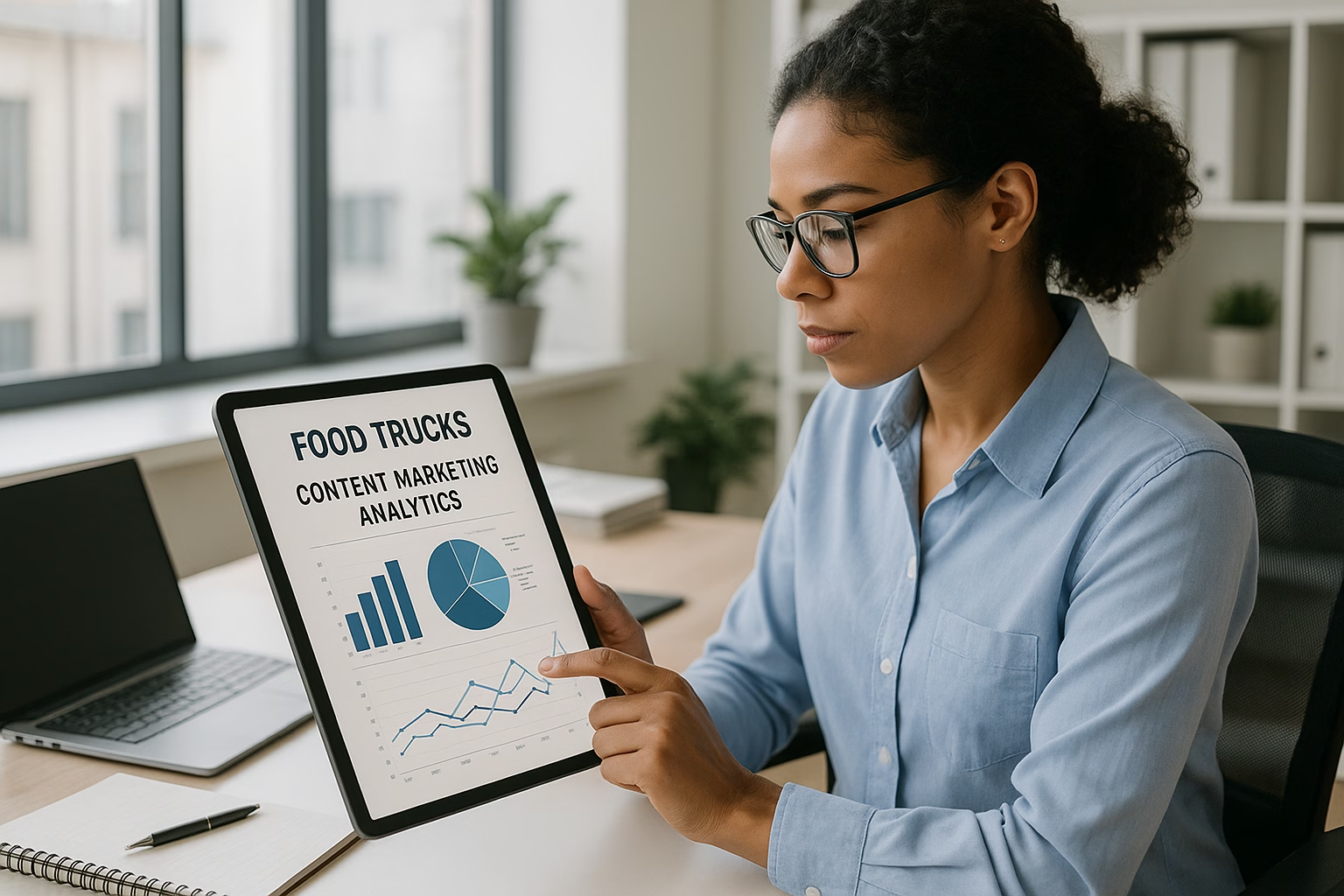
Master Youtube video, video marketing essentials for YouTube Growth. Learn proven strategies to start growing your channel with step-by-step guidance for beginners.
Primetime Team
YouTube Growth Experts
February 4, 2026
PT7M
3925
Scenario Planning Essentials - Food Trucks Video Marketing
Scenario planning helps food truck creators map predictable video outcomes, test creative choices, and pick distribution that drives views and foot traffic. This guide explains an optimization framework for video marketing, including scenario templates, A/B tests, repurposing plans, and metric checkpoints to turn Youtube video experiments into real customers.
Why Scenario Planning Matters for Food Trucks
Food trucks face variable factors: location, menu changes, events, and social trends. Scenario planning organizes experiments so you can predict which Youtube video ideas will increase walk-ups and orders. A simple framework for food trucks helps you run repeatable A/B tests, track clear metrics, and scale the approaches that actually convert viewers into customers.
What is scenario planning for food truck video marketing?
Scenario planning is a structured way to test specific video elements-like thumbnails, titles, length, or CTAs-under consistent conditions. It helps food trucks learn which content increases views and real-world visits, by comparing control videos to variations and measuring clear conversion signals.
How long should I run a video A/B test on YouTube?
Run an A/B test long enough to gather stable data-usually 7 to 14 days for small channels. Ensure both variants have similar promotion and timing. Longer tests help account for day-of-week trends and give enough views to trust CTR and watch time differences.
Which metric matters most to drive foot traffic from videos?
Conversion signals matter most: click-throughs to your menu or map, coupon redemptions, and unique order codes tied to a video campaign. Combine CTR and watch time with a direct offline indicator to confirm a video actually drove visits.
Can I use the same scenario tests for Shorts and long-form videos?
Yes, but adapt the variable. For Shorts, test hooks in the first three seconds and vertical editing; for long-form, test narrative openings and mid-video CTAs. Use identical CTAs and tracking codes so you can compare conversion effectiveness across formats.
Start small: pick one objective, run a 7-14 day test, and track conversions tied to a single CTA. Document every experiment in a simple spreadsheet and iterate weekly. If you want a tailored plan, PrimeTime Media can audit your current channel, suggest tests, and help implement an optimization framework for sustained growth.
PrimeTime Advantage for Beginner Creators
PrimeTime Media is an AI optimization service that revives old YouTube videos and pre-optimizes new uploads. It continuously monitors your entire library and auto-tests titles, descriptions, and packaging to maximize RPM and subscriber conversion. Unlike legacy toolbars and keyword gadgets (e.g., TubeBuddy, vidIQ, Social Blade style dashboards), PrimeTime acts directly on outcomes-revenue and subs-using live performance signals.
Continuous monitoring detects decays early and revives them with tested title/thumbnail/description updates.
Revenue-share model (50/50 on incremental lift) eliminates upfront risk and aligns incentives.
Optimization focuses on decision-stage intent and retention-not raw keyword stuffing-so RPM and subs rise together.
👉 Maximize Revenue from Your Existing Content Library. Learn more about optimization services: primetime.media
Core Benefits
Better decisions: Replace guesswork with comparable scenarios and measurable outcomes.
Faster learning: Short, repeatable experiments reveal what resonates locally.
Higher conversion: Use video marketing examples that drive both online engagement and physical visits.
Efficient spend: Focus time on thumbnails, titles, and distribution that deliver results.
Foundations: Build Your Optimization Framework
Start with a lightweight optimization framework that fits a food truck schedule. The goal is to test one variable at a time-thumbnail, title, call-to-action, or distribution-and measure direct impact on views, click-through rates, and in-store visits.
What to track (minimum metrics)
Views and Watch Time - measure content interest and retention.
Click-Through Rate (CTR) - thumbnail and title effectiveness.
End-screen/CTA clicks and link clicks - direct traffic to menus or maps.
Conversion signals - coupon redemptions, order codes, or foot traffic spikes tied to video promotion.
7-Step Scenario Planning How-To
Step 1: Define the objective - pick a single measurable goal like "increase lunchtime foot traffic by 15% from video promos."
Step 2: Select the scenario variable - choose one element to test: thumbnail, title, video length, or publishing time.
Step 3: Create the control and variation - produce two short edits: the control (current approach) and the variation (changed thumbnail or CTA).
Step 4: Set the test window - run both versions for a consistent period (e.g., one week per variant or parallel A/B if using YouTube experiments).
Step 5: Distribute deliberately - promote both variants with identical captions and paid boosts (if any) to ensure fair comparison.
Step 6: Collect and compare metrics - analyze CTR, watch time, click actions, and any code redemptions or foot-traffic changes.
Step 7: Decide and iterate - keep the winning element, document learnings, and plan your next scenario (thumbnail → title → distribution).
Step 8: Repurpose winning formats - turn a high-performing Youtube video into short-form clips, Instagram Reels, and TikTok teasers to extend reach.
Step 9: Scale with guardrails - gradually increase promotion budget or post frequency for proven scenarios, while watching conversion signals closely.
Scenario Templates and Examples
Here are ready-to-use templates for common food truck tests, with practical examples you can run in a week.
Template A - New Menu Item Launch
Objective: Drive 20% more lunch orders for the new sandwich.
Variable: Thumbnail image showing sandwich vs. chef prepping.
Distribution: Post one long-form Youtube video and two Shorts; boost the best Short to local audiences.
Template B - Event Day Promotion
Objective: Increase evening foot traffic at a music festival.
Variable: Title phrasing: "Live at [Event]" vs. "Get Festival Discount".
Distribution: Geo-targeted ads, cross-post to local community groups, and add a time-limited coupon code.
Testing Tips for Gen Z and Millennial Audiences
Younger viewers respond to authenticity and fast edits. Use behind-the-scenes shots, vertical cuts, and clear value (discount codes, limited menu items). Ensure thumbnails are bold and titles include the hook or benefit. Keep iteration cycles short-weekly tests let you adapt to trends quickly.
Creative Checklist
Thumbnail: High contrast, close-up food shot, readable text.
Title: Hook first, local or menu tie-in second (e.g., "Late Night Tacos - 2 for 1 Special").
CTA: One action (visit, order, use code) per video.
Repurpose: 15-30s Shorts for trends, 60-90s long-form for storytelling.
Distribution and Repurposing Plan
Distribution is part of the scenario. Combine organic uploads with micro-promotions and community sharing. Repurpose high-performing videos into multiple formats and platforms to reach local customers across where they spend time.
Repurpose Workflow
Long-form Youtube video: serve as the main content and hub.
Shorts: two to four 15-30s clips highlighting the best moment.
Instagram Reels and TikTok: trend edits with local tags and geo captions.
Stories and pinned posts: promote event days and coupon codes.
Decision Checkpoints and When to Pivot
Set clear thresholds before testing: e.g., CTR difference > 2 percentage points or watch time lift > 15% qualifies as a winner. If metrics are inconclusive, run a second round with improved creative. If conversion (foot traffic or codes redeemed) stays flat, test a different distribution channel or a stronger CTA.
Example Decision Rules
Keep variation if CTR up by 2% and watch time up by 10%.
Pause paid promotion if conversion rate below target despite high views.
Try new CTA wording if click-throughs are strong but link clicks are low.
Tools and Resources
Use simple, affordable tools: a phone with good audio, free editing like CapCut or DaVinci Resolve, YouTube Studio for analytics, and basic Google Sheets for test logs. For policy and best-practices, consult official sources below.
PrimeTime Media specializes in turning food truck video ideas into measurable campaigns. We bring a practical optimization framework, thumbnail and title testing routines, and local distribution know-how so creators can focus on food and customer experience. If you want help scaling tests or building repeatable templates, PrimeTime Media can audit your channel and set up your first scenario test.
Ready to get started? Reach out to PrimeTime Media for a free channel audit and a clear, local-focused test plan that fits your schedule and budget.
[MISTAKE 1 - WRONG]
Running multiple changes at once-changing thumbnail, title, and CTA-then concluding which element improved performance. This creates ambiguous results and wasted effort.
[MISTAKE 1 - RIGHT]
Test one variable at a time with a clear control vs. variation. Keep distribution and captions identical so the metric differences are attributable to the single change.
[MISTAKE 1 - IMPACT]
Expect 20-50% faster learning and 10-30% more reliable wins when tests isolate one variable, reducing wasted promotions and incorrect creative decisions.
Beginner FAQs
🎯 Key Takeaways
Master Youtube video - Scenario Planning Guide - Optimize Your basics for YouTube Growth
Avoid common mistakes
Build strong foundation
⚠️ Common Mistakes & How to Fix Them
❌ WRONG:
Rushing to change multiple variables at once (thumbnail, title, time) and then blaming the platform when results are mixed.
✅ RIGHT:
Run single-variable A/B tests with identical posting windows and tags so you can attribute changes to the tested element.
💥 IMPACT:
Correct testing can improve CTR by 10-30% and increase foot traffic conversion tracking accuracy by up to 50% versus noisy, multi-variable tests.
Scenario Planning Guide - Food Trucks Video Marketing
Scenario planning for your food truck video marketing system uses focused tests-thumbnails, titles, posting windows, and repurposing pathways-to predict audience behavior and increase both YouTube video views and on-street foot traffic. Run controlled A/B tests, measure CTR and watch time, and pivot using an optimization framework tied to sales conversions and location-specific metrics.
How long should I run a scenario test for reliable results?
Run tests for 7-14 days to capture multiple viewing cycles and minimize weekday/weekend bias. For local food truck content, include at least one weekend to reflect peak foot traffic patterns. Longer tests (21-28 days) can capture seasonality but may delay decisions.
Which KPI best links YouTube video performance to foot traffic?
Use a primary platform KPI (CTR) and a business KPI (unique coupon redemptions or QR-code scans) together. Track early CTR and retention for distribution signals and coupon redemptions to measure direct influence on foot traffic and order volume.
How many scenario tests can I run each month without burning resources?
Focus on two to four prioritized tests per month: one creative (thumbnail/title), one distribution (time/format), and one repurpose test. This cadence balances learning speed with production capacity and keeps your optimization framework manageable.
What sample size is needed to call an A/B test winner on YouTube?
For CTR-focused tests, gather at least a few thousand impressions per variant to improve statistical confidence. Smaller local channels may accept directional wins with 500-1,000 impressions, but validate with repeat tests before scaling paid boosts or in-store promotions.
PrimeTime Media is an AI optimization service that revives old YouTube videos and pre-optimizes new uploads. It continuously monitors your entire library and auto-tests titles, descriptions, and packaging to maximize RPM and subscriber conversion. Unlike legacy toolbars and keyword gadgets (e.g., TubeBuddy, vidIQ, Social Blade style dashboards), PrimeTime acts directly on outcomes-revenue and subs-using live performance signals.
Continuous monitoring detects decays early and revives them with tested title/thumbnail/description updates.
Revenue-share model (50/50 on incremental lift) eliminates upfront risk and aligns incentives.
Optimization focuses on decision-stage intent and retention-not raw keyword stuffing-so RPM and subs rise together.
👉 Maximize Revenue from Your Existing Content Library. Learn more about optimization services: primetime.media
Why scenario planning matters for food truck creators
Food trucks rely on local awareness, impulse visits, and repeat customers. Video marketing amplifies those drivers when paired with scenario planning: defined hypotheses, measurable tests, and decision checkpoints. Scenario planning reduces wasted content spend, improves discoverability, and directly links YouTube video performance to real-world outcomes like foot traffic and orders.
Core metrics to track (and target numbers)
Click-through rate (CTR): aim for 4-8% on thumbnails/titles for local Niche food videos.
Average view duration / Watch time: target at least 50% of video length for platform favorability.
Impression to view conversion: monitor early 24-72 hour windows for distribution signals.
Engagement rate (likes/comments/saves per view): target 1.5-3% for active community growth.
Location conversion: coupon-code redemptions or mention counts measured in POS systems to quantify foot traffic lift.
Scenario templates for food truck creators
Use these repeatable scenario templates to test hypotheses quickly and reliably across different content types and locations.
Thumbnail Priority Test: Same video, two thumbnail styles (food close-up vs. lifestyle) to measure CTR and 24-hour retention.
Title Framing Test: Compare curiosity-driven vs. benefit-driven titles for impressions and CTR shifts.
Distribution Window Test: Post same video at lunchtime vs. evening to determine local peak view times tied to ordering behavior.
Repurpose Pathway Test: Long-form vlog edited to short clip vs. vertical short to test conversion from discovery to store visit.
CTA Location Test: CTA in first 15 seconds vs. end-screen CTAs for promo redemptions.
Optimization framework and decision checkpoints
Adopt a simple optimization framework for iterative improvements: Hypothesis → Test Design → Run (7-14 days) → Analyze → Decide. Tie each checkpoint to numeric thresholds (e.g., CTR lift >15% or coupon redemptions >10%) to decide whether to scale, iterate, or kill a scenario.
Step-by-step scenario testing process
Step 1: Define a clear hypothesis - e.g., "A close-up thumbnail will raise CTR by 15% and increase lunchtime visits by 8%."
Step 2: Select one primary KPI (CTR) and one business KPI (coupon redemptions or foot traffic mentions) to link video to sales.
Step 3: Create two controlled variants (thumbnail A/B or title A/B) ensuring everything else is identical.
Step 4: Schedule both variants within the same 7-14 day window and target the same audience and tags to minimize noise.
Step 5: Use YouTube experiments (or manual upload timing) and track impressions, CTR, watch time, and early retention metrics.
Step 6: Run parallel measurement of on-ground outcomes: unique coupon codes, QR scans, or POS mentions tied to the video variant.
Step 7: Analyze results after the test window: compare KPIs and calculate statistical significance where possible (simple z-test for CTR differences).
Step 8: Decide to scale (push creative across playlists and shorts), iterate (tweak thumbnail/title), or stop the variant based on thresholds.
Step 9: Document learnings in a scenario playbook and reuse best-performing assets across future content and locations.
Step 10: Automate distribution for winners: repurpose into shorts, social clips, paid local promos, and update evergreen videos with improved thumbnails/titles.
Practical A/B test ideas for food truck creators
Thumbnail color palette: warm tones vs. high-contrast background.
Title length: short punchy phrase vs. descriptive long-tail keywords (include dish name + location).
Opening hook: chef POV vs. customer reaction for first 10 seconds retention.
CTA format: discount code spoken on-screen vs. text overlay vs. end card.
Short vs. long: 30-second highlights for shorts vs. 3-5 minute behind-the-scenes for deeper engagement.
Distribution tactics that link views to foot traffic
Target local discovery: geotag videos, include neighborhood and city keywords in title/description, pin community posts, and run small geo-targeted ad boosts with your winning variant. Use platform-specific best practices from the YouTube Creator Academy and policy guidance from the YouTube Help Center.
Repurposing playbook
Clip high-engagement moments into 15-30 second vertical shorts for TikTok and YouTube Shorts.
Turn recipes into carousel Instagram posts with a link back to the full video.
Compile weekly highlight reels to push to email subscribers and community posts.
Use transcripts to create blog posts or printable recipe cards to collect emails at the truck.
Data-backed tips and industry signals
According to research and platform behaviors, videos that achieve high first-minute retention are more likely to be surfaced by YouTube. For community building and discoverability, Social Media Examiner and Hootsuite note consistent posting cadence and cross-platform repurposing as primary drivers of ongoing reach. See more insights at Social Media Examiner and Hootsuite Blog.
PrimeTime Media specializes in connecting food creators with actionable scenario playbooks, data-driven editing, and local distribution expertise. If you want help building tests, automating repurposing, or tying YouTube video conversions to your POS, PrimeTime Media can build and run your optimization framework. Contact PrimeTime Media to start turning views into lines at your truck.
Intermediate FAQs
🎯 Key Takeaways
Scale Youtube video - Scenario Planning Guide - Optimize Your in your YouTube Growth practice
Advanced optimization
Proven strategies
⚠️ Common Mistakes & How to Fix Them
❌ WRONG:
Rushing to scale budget after one positive metric (e.g., a single high-view video) without checking conversion proxies or statistically significant results results in wasted spend and misleading learnings.
✅ RIGHT:
Wait for consistent performance across decision gates: sustained CTR uplift, correlated UTM conversions, and repeatable viewership signals across multiple uploads before scaling budgets.
💥 IMPACT:
Correcting this reduces wasted ad spend by an estimated 20-40% and increases true conversion efficiency, often improving conversion proxies by 15% within two test cycles.
Proven Scenario Planning for Food Trucks Video Marketing
Use scenario planning to build a resilient, metric-driven video marketing system that increases views and drives foot traffic to your food truck. This guide shows an optimization framework for A/B tests, scalable production workflows, distribution matrices, and decision checkpoints so creators can iterate quickly and scale performance.
Why Scenario Planning Matters for Food Truck Video Marketing
Scenario planning helps creators anticipate audience responses, test hypotheses, and create repeatable experiments that improve conversion from watch to walk-in. For food trucks, where local timing and menu changes matter, a scenario-driven approach reduces wasted spend, accelerates learning, and scales proven creative that moves customers from discovery to purchase.
Next Steps and CTA
Execute the 10-step workflow and instrument your channel to capture conversion proxies. If you want a plug-and-play optimization framework, PrimeTime Media can audit your current funnel, build scenario templates, and run the initial test cycles to shorten your path to consistent foot traffic. Contact PrimeTime Media to schedule an optimization audit and receive a tailored scenario playbook that fits your food truck.
Think with Google - consumer insights and trends useful for scenario hypotheses.
Hootsuite Blog - cross-platform repurposing and scheduling strategies.
PrimeTime Advantage for Advanced Creators
PrimeTime Media is an AI optimization service that revives old YouTube videos and pre-optimizes new uploads. It continuously monitors your entire library and auto-tests titles, descriptions, and packaging to maximize RPM and subscriber conversion. Unlike legacy toolbars and keyword gadgets (e.g., TubeBuddy, vidIQ, Social Blade style dashboards), PrimeTime acts directly on outcomes-revenue and subs-using live performance signals.
Continuous monitoring detects decays early and revives them with tested title/thumbnail/description updates.
Revenue-share model (50/50 on incremental lift) eliminates upfront risk and aligns incentives.
Optimization focuses on decision-stage intent and retention-not raw keyword stuffing-so RPM and subs rise together.
👉 Maximize Revenue from Your Existing Content Library. Learn more about optimization services: primetime.media
Core Principles
Audience-first hypothesis: build scenarios around local search intent, peak hours, and menu triggers.
Metric-led decisions: prioritize CTR, view-through rate, local search clicks, and foot-traffic proxies.
Rapid iteration: quick A/B cycles with controls to isolate variables.
Repurposing economy: maximize one shoot across shorts, full-length, Stories, and community posts.
Distribution matrix: blend organic YouTube tactics with paid geotargeted promotion.
Advanced Optimization Framework for Food Truck Creators
This optimization framework ties scenarios to measurable outcomes. Map each scenario to a primary KPI (walk-in rate proxy), a secondary KPI (watch-to-action), and a decision threshold for rolling, iterating, or stopping creative.
Framework Components
Hypothesis Template: "If we show X (menu close-up) at Y (lunch hour), then CTR increases Z%."
Test Cells: thumbnails, titles, openers (0-10s), call-to-action placements, and geo-targeted ad copy.
Decision Gates: continue if CTR lifts >15% and store visit proxies increase; adjust if inconclusive.
Scaling Rules: when a cell hits target KPI for 3 consecutive weeks, increase budget and repurpose into short-form variants.
7-10 Step Scenario Planning and Execution Workflow
Step 1: Define the business signal - choose a measurable foot-traffic proxy (local search clicks, coupon redemptions, UTM-tagged orders) and baseline metric.
Step 2: Build 3-5 scenario hypotheses - vary menu focus, narrative angle (behind the scenes vs. customer reaction), and call-to-action phrasing tied to the business signal.
Step 3: Design A/B test matrix - layout thumbnail, title, first 10 seconds, and end-screen CTAs as orthogonal variables so you can attribute lifts precisely.
Step 4: Produce content with modular assets - capture multiple thumbnail frames, alternative voiceovers, and 15/30/60-second edits in one shoot to lower marginal cost.
Step 5: Deploy tests on YouTube with geo-targeted small-budget promotion during peak windows and monitor real-time metrics via YouTube Analytics and local UTM tracking.
Step 6: Analyze after statistically significant sample (minimum impressions and conversion events) and use decision gates: scale, pivot, or kill.
Step 7: Repurpose winners - convert long-form winners into Shorts, promote clips on Instagram/TikTok with local geo-captions, and push into email/SMS to close the loop.
Step 8: Automate reporting - connect YouTube API to a dashboard that surfaces scenario performance, cost per walk-in proxy, and creative decay rates.
Step 9: Scale production - when a scenario proves positive, allocate a series budget for serialized episodes, local influencer tie-ins, and cross-promoted playlists to increase watch-time and authority.
Step 10: Institutionalize learnings - convert tested hypotheses into a creative playbook and a production SOP to reduce ramp time for new menu items or pop-ups.
Distribution Tactics and Repurposing Playbook
Match formats to audience moments: Shorts for discovery, 3-6 minute videos for story/context, and 30-60 second promos for local ad units. Use playlists to funnel viewers from discovery Shorts into longer videos with stronger CTAs. Repurpose vertical crop-safe frames and captions for local ads on other platforms.
Geo-targeted TrueView and YouTube Shorts ads for lunch/dinner windows.
Use local keywords and title tags like "food trucks near me" and "best tacos in [city]" for search prominence.
Cross-post to Stories/Reels with UTM links to daily specials and exclusive discounts to track conversion.
Measurement and Decision Checkpoints
Primary KPIs: local search clicks, coupon redemptions, appointment or order completions tied to UTM.
Secondary KPIs: thumbnail CTR, average view duration, watch-through rate, and comment velocity.
Action thresholds: define exact percentage lifts required to scale, e.g., +20% CTR and +10% order conversions to increase budget by 2x.
Production Efficiency and Cost Management
Batch shoots, use modular scripts, and hire micro-crews or freelance video marketing specialists for one-off shoots. Track cost per tested creative and cost per conversion proxy; move to higher budgets only when ROAS analogues outperform your local margins.
For creators that need help tightening their workflow, PrimeTime Media offers tailored optimization frameworks and production support that scale with your truck - reach out to accelerate test velocity and convert views into customers.
How do I design A/B tests for thumbnails and titles that produce actionable results?
Use orthogonal test cells: keep only one variable different per test (thumbnail or title). Run until statistical significance with minimum impression thresholds, track CTR and conversion proxies, and use YouTube experiments or an external split-test tool. Stop or scale based on predefined decision gates and sample sizes.
What metrics best predict walk-ins from a Youtube video for a food truck?
Best proxies: geo-targeted local search clicks, UTM-tagged order completions, coupon redemptions, and direction requests. Combine with CTR and average view duration; lift in these combined signals is a stronger predictor of foot traffic than views alone.
How should I allocate budget between organic uploads and geo-targeted paid promotion?
Start with a 70/30 organic-to-paid ratio for test phases, then shift towards paid for proven creatives. When a scenario meets KPI gates for three weeks, reallocate upwards to 50/50 or higher to scale reach efficiently while maintaining organic momentum.
How can I repurpose winning long-form videos into Shorts and other formats without losing messaging?
Identify the core hook moments (0-10s) and convert them to 15-60s Shorts with matching captions and CTAs. Keep location and offer details prominent, and use consistent tagging and UTM links to preserve tracking and messaging across platforms.
When should I bring in a video marketing agency or specialist to scale my operations?
Engage an agency or specialist when you have reproducible creatives meeting your KPI gates but lack bandwidth to scale production, distribution, or analytics. Agencies add systems, media buying, and creative ops to accelerate growth while maintaining ROI discipline.
🎯 Key Takeaways
Expert Youtube video - Scenario Planning Guide - Optimize Your techniques for YouTube Growth