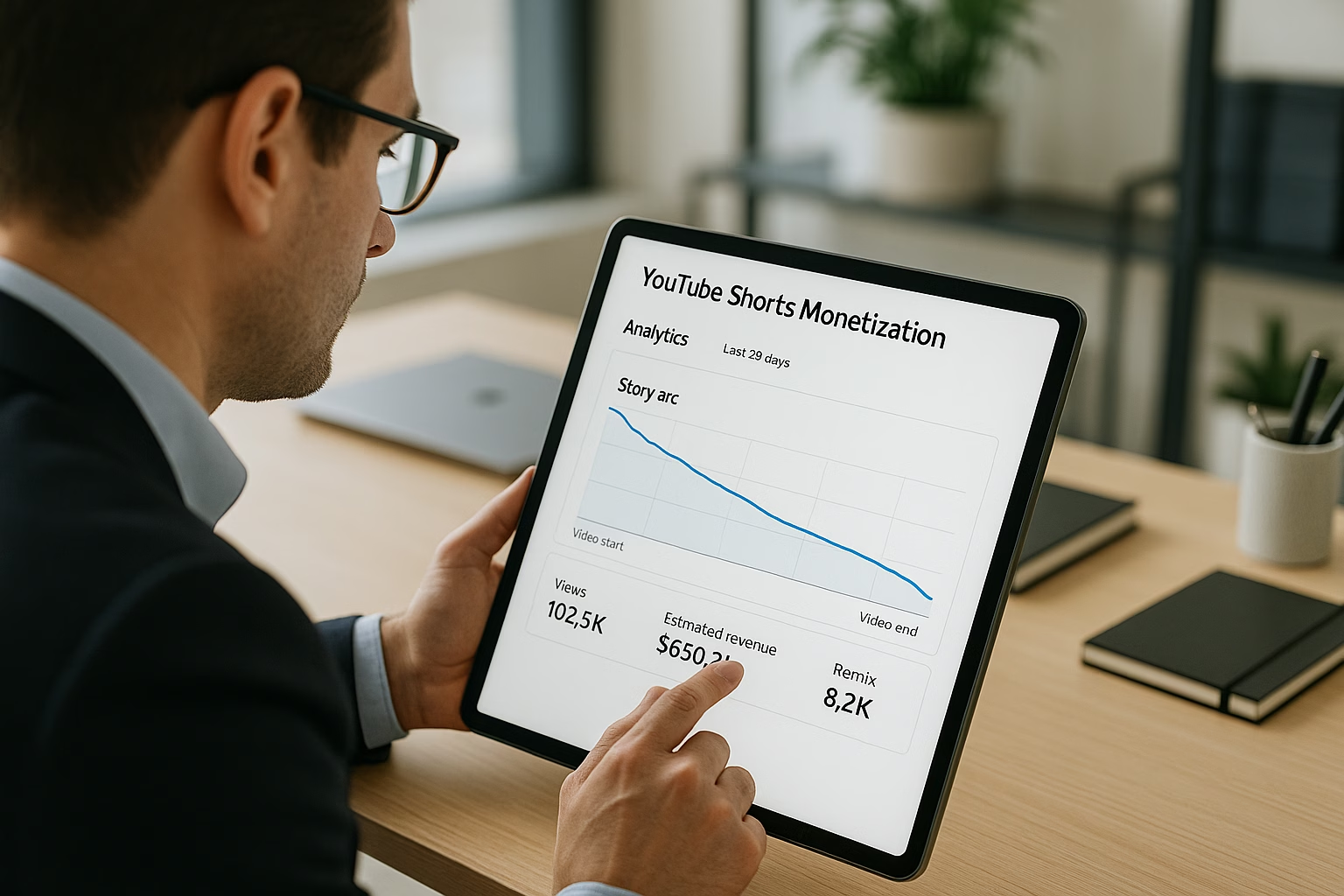
Master Youtube shorts, shorts story essentials for YouTube Growth. Learn proven strategies to start growing your channel with step-by-step guidance for beginners.
Primetime Team
YouTube Growth Experts
February 4, 2026
PT6M
3623
YouTube Shorts Story Arc Basics - Essential Guide
A shorts story arc is a simple three‑part structure-hook, build, payoff-designed to fit inside a YouTube shorts video so viewers watch, engage, and come back. This guide explains each part with clear examples, a step‑by‑step planning checklist, and beginner FAQs to help creators aged 16-40 start producing compelling Shorts confidently.
PrimeTime Advantage for Beginner Creators
PrimeTime Media is an AI optimization service that revives old YouTube videos and pre-optimizes new uploads. It continuously monitors your entire library and auto-tests titles, descriptions, and packaging to maximize RPM and subscriber conversion. Unlike legacy toolbars and keyword gadgets (e.g., TubeBuddy, vidIQ, Social Blade style dashboards), PrimeTime acts directly on outcomes-revenue and subs-using live performance signals.
Continuous monitoring detects decays early and revives them with tested title/thumbnail/description updates.
Revenue-share model (50/50 on incremental lift) eliminates upfront risk and aligns incentives.
Optimization focuses on decision-stage intent and retention-not raw keyword stuffing-so RPM and subs rise together.
👉 Maximize Revenue from Your Existing Content Library. Learn more about optimization services: primetime.media
Why a Story Arc Works for Youtube shorts
YouTube shorts reward quick retention and repeat views. A tight story arc gives viewers an emotional or curiosity payoff in 15-60 seconds, improving watch‑through and the chance YouTube recommends your video. Use a clear hook, a focused build, and a satisfying payoff to keep viewers from swiping away.
Core Parts of a Shorts Story Arc
Hook: Grab attention in the first 1-3 seconds with a surprising visual, bold text, or a question.
Build: Show the promise or tension-what’s at stake-between 3-30 seconds depending on length.
Payoff: Deliver a clear, emotionally satisfying ending or reveal so viewers feel rewarded and likely to rewatch.
Practical Examples for Each Part
Use these short examples you can adapt for different niches (lifestyle, comedy, gaming, education):
Beauty Tip (15s): Hook: “Stop using your brush wrong!” Build: Quick demo of mistake. Payoff: Easy fix and before/after reveal.
Mini Skit (30s): Hook: Funny one‑line punch. Build: Short escalating gag. Payoff: Unexpected twist that ties back to the hook.
How‑to Clip (45s): Hook: “Make iced coffee better in 30 seconds.” Build: Show three quick steps. Payoff: Taste test and reaction.
How to Plan a Shorts Story Arc - A Step by Step Tutorial
Follow this ordered tutorial step process to plan and shoot Shorts with a deliberate arc. These seven to ten steps keep your creation focused and ready for upload.
Step 1: Define your single idea - pick one message or reveal that fits 15-60 seconds and write it as one sentence.
Step 2: Choose a hook - decide a visual or line that will stop thumbs from scrolling in the first 1-3 seconds.
Step 3: Map the build - list 2-4 beats that move the viewer from hook to payoff without extra detail.
Step 4: Design the payoff - plan a clear reveal, transformation, or punchline that resolves the setup.
Step 5: Time your arc - allocate seconds to hook, build, payoff so total stays within Youtube shorts length that fits your idea.
Step 6: Script or storyboard quick shots - jot down camera angles, on‑screen text, and the exact words to say.
Step 7: Film tight clips - shoot multiple takes, keeping clips short and energetic; prioritize clarity over perfection.
Step 8: Edit for pace - trim to the fastest readable version, add jump cuts, on‑screen captions, and sound design for impact.
Step 9: Add a CTA or loop - end with a prompt or a visual hook that encourages rewatching (repeat the opening frame or ask a question).
Step 10: Test and post - upload, check watch metrics, then iterate. Use the data to refine your next arc.
Shot and Timing Tips
Keep shots short (1-3 seconds) during the hook to maximize attention.
Use vertical framing and strong closeups for emotional impact.
Target 15-30 seconds when possible; 45-60 is okay if the build justifies it.
Use captions and on‑screen prompts since many watch without sound.
Checklist Before You Publish
Single idea confirmed and written as one sentence.
Hook works in first 3 seconds when muted.
Build has clear tension or promise.
Payoff is satisfying and easily understood.
Video pacing trimmed; captions added.
Thumbnail frame chosen and title includes searchable words.
Editing Tricks That Make the Arc Pop
Jump cuts, beat‑driven music, and timed text amplify a story arc. Match cuts between hook and payoff to create satisfying loops. If you want to understand watch time patterns and optimization beyond editing, PrimeTime Media offers creator tools and advice that simplify testing and scaling Shorts.
[MISTAKE 1 - WRONG]
Trying to cram multiple unrelated ideas into one short - the hook promises A, the middle shows B, and the payoff never ties back. This creates confusion and low retention.
[MISTAKE 1 - RIGHT]
Focus on one clear idea: create a hook, build, and payoff all tied to that single message. If you want several ideas, make separate Shorts so each arc is tight and satisfying.
[MISTAKE 1 - IMPACT]
Correcting to a single‑idea arc often improves full‑view rates by 10-30% for new creators because viewers get a clear payoff and are likelier to rewatch or share.
Examples You Can Remix
Try these quick arc templates that modern creators (Gen Z + Millennials) can reuse and personalize.
PrimeTime Media helps creators plan, test, and scale short‑form arcs with easy templates and analytics that translate watch behavior into actionable edits. If you want straightforward support to refine your hooks and improve watch rates, PrimeTime Media offers practical services and coaching.
Ready to level up your Shorts? Visit PrimeTime Media to get an intro session and templates tailored to your niche - create smarter, not harder.
Beginner FAQs
What is the ideal youtube shorts length for a story arc?
The ideal YouTube shorts length for a story arc is typically 15-30 seconds for simple arcs and up to 45-60 seconds if the build needs extra context. Shorter arcs usually get better retention, but choose length based on whether the payoff feels natural and satisfying.
How do I hook viewers in the first 3 seconds of a shorts story?
Hook viewers with a bold visual, a surprising line, or an intriguing question. Use large on‑screen text, a face closeup, or a loud beat. The goal is immediate clarity: viewers should know what to expect and feel compelled to keep watching.
Can story arcs improve youtube shorts monetization opportunities?
Strong story arcs improve watch time and repeat views, which feed the YouTube algorithm and can increase visibility. Higher visibility may boost monetization options like ads and channel growth. Monetization depends on broader channel thresholds and policies, so pair arcs with overall channel strategy.
Do I need special tools to test which arc works best?
No special tools are required to start-upload different arc versions and compare watch percentages in YouTube Studio. For deeper insights, use heatmaps and analytics tools; PrimeTime Media’s tutorials and templates simplify A/B testing for new creators.
How often should I post Shorts to practice arcs and improve?
Post consistently, aiming for 2-4 Shorts per week to gather data quickly. Regular practice helps refine hooks and timing. Use viewer feedback and watch metrics to iterate; short, focused tests reveal which arcs resonate fastest.
🎯 Key Takeaways
Master YouTube Shorts Story Arc Basics - A Friendly Guide for New C basics for New
Avoid common mistakes
Build strong foundation
⚠️ Common Mistakes & How to Fix Them
❌ WRONG:
Relying on a slow introduction and long setup in a short, which loses viewers before the payoff and lowers completion rates.
✅ RIGHT:
Use an immediate 0-3 second hook, compress the build, and deliver payoff early enough to secure completion-this preserves algorithmic favor and share potential.
💥 IMPACT:
Fixing the approach can boost view-through by 20-40% and increase recommendations; better retention directly correlates with more impressions and subscriber growth.
YouTube Shorts Story Arc Basics - Essential Tutorial
YouTube Shorts Story Arc Basics - Essential Tutorial
Use a three-act story arc-hook, build, payoff-to keep viewers watching YouTube shorts video content. In 15-60 seconds, deliver an immediate hook, a clear escalation, and a satisfying payoff; data shows stronger completion rates when the first 3-5 seconds hook viewers, improving watch-through and algorithmic ranking.
Why story arcs matter for YouTube shorts
Shorts compete for attention in a fast-scroll environment. A concise story arc helps viewers commit to the whole video; YouTube rewards higher average view duration and completion rate. Think of each short as a micro-narrative: the structure increases emotional investment and shareability - vital for growth among Gen Z and Millennial audiences.
Final tips for consistent growth
Batch-produce variations of the same arc to test which hooks and payoffs perform best.
Use analytics and heatmaps to find exact drop-off frames; PrimeTime Media’s workflows specialize here.
Keep a short’s thumbnail and first frame attention-grabbing - mobile-first design matters.
Iterate weekly: small edits to pacing can produce outsized improvements in retention.
Ready to sharpen your shorts story arc? PrimeTime Media can audit two shorts and provide actionable edits that improve retention. Reach out to explore analytics-driven creative support and scale your YouTube growth.
PrimeTime Advantage for Intermediate Creators
PrimeTime Media is an AI optimization service that revives old YouTube videos and pre-optimizes new uploads. It continuously monitors your entire library and auto-tests titles, descriptions, and packaging to maximize RPM and subscriber conversion. Unlike legacy toolbars and keyword gadgets (e.g., TubeBuddy, vidIQ, Social Blade style dashboards), PrimeTime acts directly on outcomes-revenue and subs-using live performance signals.
Continuous monitoring detects decays early and revives them with tested title/thumbnail/description updates.
Revenue-share model (50/50 on incremental lift) eliminates upfront risk and aligns incentives.
Optimization focuses on decision-stage intent and retention-not raw keyword stuffing-so RPM and subs rise together.
👉 Maximize Revenue from Your Existing Content Library. Learn more about optimization services: primetime.media
Key principles
Hook fast: capture attention in 0-3 seconds.
Escalate clearly: raise stakes or curiosity quickly.
Payoff: deliver a satisfying resolution or payoff within 15-60 seconds.
Optimize for watch-through: cut filler, emphasize contrast and surprise.
Repeatable format: develop micro-formats that viewers recognize and subscribe for.
Data-backed tactics
Studies and platform guidance reveal watching patterns: retention drops sharply after the first few seconds; videos that retain 40-60% of viewers to the end are more likely to be recommended. Use bold hooks, visual jumps, and sound cues to boost retention. Refer to YouTube Creator Academy and Think with Google for best practices and attention data.
Step-by-step arc tutorial for a YouTube shorts story
Use this 8-step tutorial step by step to design, shoot, and publish a tight story arc for your next short. Each step focuses on actions you can apply immediately.
Step 1: Define the core idea in one sentence - what surprising or emotional outcome will the viewer care about?
Step 2: Write a 3-second hook: a question, visual shock, or promise (e.g., "I fixed this in 10 seconds" or show a surprising result first).
Step 3: Map the three acts onto timestamps: Hook (0-3s), Build (3-30s), Payoff (last 5-10s); keep total length aligned with YouTube shorts length guidance.
Step 4: Plan visuals and sound cues per beat: contrast, jump cuts, captions, and a memorable audio sting that signals the payoff.
Step 5: Shoot multiple micro-takes: capture variations of the hook and payoff so you can edit for maximum retention.
Step 6: Edit tightly: remove pauses, increase pace during the build, and place the payoff before the final second to avoid trailing off.
Step 7: Add captions, a clear thumbnail frame (first frame impact), and an optimized title using keywords like "youtube shorts" and "story arc" for discoverability.
Step 8: Publish with Shorts metadata: include #Shorts, a compelling description, and monitor YouTube Analytics for watch time and audience retention to iterate.
Practical checklist before publishing
Hook tested in the edit: does it stop your scroll?
Act lengths mapped and balanced.
Strong visual or audio payoff within final 5-10 seconds.
Captions present and readable on small screens.
Optimized title and tags referencing "youtube shorts" and the core topic.
Creative formats that suit a shorts story arc
Transformation reveal (before → after) - clear payoff, high shareability.
Quick tutorial with twist - teach then surprise or simplify.
Micro-challenge - hook with the challenge, escalate tension, reveal outcome.
Mini-narrative - character goal, obstacle, punchline payoff.
Optimization and analytics
Track these KPIs: average view duration, percentage view-through, click-through rate, and new subscribers per short. Channels that iterate based on retention curves often see faster growth. PrimeTime Media uses heatmap and analytics-driven workflows to help creators spot where viewers drop off and how to tighten arcs (heatmap optimization and Start Growing Results with Grafana heatmap).
Monetization and platform considerations
YouTube shorts monetization has specific rules; check the YouTube Help Center and Creator Academy for updates. While Shorts are now integrated more into the main ecosystem, focus on audience growth and watch time first - monetization scales when you consistently retain and convert viewers.
Also consider cross-posting smartly: adapt vertical edits for TikTok while respecting platform-specific trends and community guidelines (compare approaches via Hootsuite Blog and Social Media Examiner insights).
How PrimeTime Media helps creators
PrimeTime Media combines analytics, creative coaching, and heatmap optimization to tighten shorts story arcs. We help creators test multiple hooks, analyze drop-off points, and build repeatable formats that convert viewers into subscribers. For creators aged 16-40, our approach blends cultural trends with data-driven edits for faster channel growth.
If you want help refining a short or testing multiple hooks with analytics support, connect with PrimeTime Media for tailored feedback and scalable workflows: Heatmap automation and API integration and practical growth playbooks like our beginner growth essentials.
Intermediate FAQs
What is the ideal YouTube shorts length for a story arc?
Aim for 15-30 seconds when possible; this length balances attention and story completeness. Shorter shorts (under 15s) work for quick hooks and reveals, while 30-60s allow a fuller three-act arc. Prioritize watch-through; analytics trumps raw length for discoverability.
How do I hook viewers in the first three seconds of a short?
Start with an unexpected visual, a compelling question, or a dramatic promise. Use motion, bold text captions, or a recognizable audio cue. Test multiple openings - hooks that raise curiosity or surprise usually produce higher retention and better algorithmic recommendations.
Can YouTube shorts monetization support story-driven content?
Yes. Monetization relies on building consistent watch time and audience rather than single videos. Story-driven shorts that retain viewers and convert subscribers contribute to eligibility for monetization programs. Always follow YouTube policy and monitor updates on the YouTube Help Center.
How should I split the three acts across a 30-second short?
Allocate roughly 0-3 seconds for the hook, 3-22 seconds for the build (introduce stakes or complications), and 22-30 seconds for the payoff. Deliver the payoff slightly before the end to avoid drop-off and increase completion rates tracked in analytics.
🎯 Key Takeaways
Scale YouTube Shorts Story Arc Basics - A Friendly Guide for New C in your New practice
Advanced optimization
Proven strategies
⚠️ Common Mistakes & How to Fix Them
❌ WRONG:
Relying on long intros and vague hooks that delay the main promise. This kills early retention and prevents the algorithm from recommending the Short widely.
✅ RIGHT:
Start with an explicit, compelling hook in the first 1-3 seconds, then deliver a tight build and payoff within 25 seconds or less to maximize watch velocity.
💥 IMPACT:
Fixing the hook and timing can increase first‑minute retention by 15-40% and improve impressions by platform signals, potentially doubling organic reach for that Short.
Essential YouTube Shorts Story Arc Guide
Featured answer: A tight three‑act story arc for YouTube Shorts uses a bold hook, compact build, and clear payoff in 15-30 seconds to maximize retention and watch velocity. Structure each short like a micro‑narrative, optimize metadata and thumbnails, then scale with batching, templates, and data‑driven A/B testing.
Why story arcs matter for modern Shorts creators
Shorts reward watch time and replays. A deliberate story arc turns a single view into a complete emotional loop, increasing retention and signaling quality to YouTube’s algorithm. For Gen Z and Millennial audiences (16-40), rhythm, authenticity, and rapid payoff work best: hook fast, escalate tension or surprise, and land a memorable payoff.
How long should a story arc Short be for best retention?
Optimal length varies, but aim for 15-30 seconds for a complete three‑act micro‑story. Test 10s and 35s variants to find audience sweet spots; longer Shorts can work if the payoff justifies extra time and retention remains high.
How do I scale Shorts production without losing creative quality?
Use templated edits, batch shoots, and hook libraries to scale. Keep 30-40% of output as high-effort signature pieces to maintain brand depth while using templates for rapid experimentation and data collection.
What metrics indicate a story arc is working on Shorts?
Key signals: strong first‑10‑second retention, a rewatch spike around the payoff, above‑average CTR on impressions, and a positive subscriptions‑per‑view rate. Those metrics show both appeal and audience commitment.
How should I structure A/B tests for hook and payoff?
Test one variable at a time: publish multiple hooks with the same build and payoff across a batch. Compare retention curves and CTR after at least 24-72 hours to identify winning hooks and iterate rapidly.
Can Shorts drive long‑form watch and monetization?
Yes. Shorts can funnel viewers to long‑form content when you use narrative threads or episodic arcs. Measure subscription lift and long‑form view increases after Shorts spikes to optimize monetization funnels and content sequencing.
Where to learn official platform rules and best practices?
PrimeTime Media is an AI optimization service that revives old YouTube videos and pre-optimizes new uploads. It continuously monitors your entire library and auto-tests titles, descriptions, and packaging to maximize RPM and subscriber conversion. Unlike legacy toolbars and keyword gadgets (e.g., TubeBuddy, vidIQ, Social Blade style dashboards), PrimeTime acts directly on outcomes-revenue and subs-using live performance signals.
Continuous monitoring detects decays early and revives them with tested title/thumbnail/description updates.
Revenue-share model (50/50 on incremental lift) eliminates upfront risk and aligns incentives.
Optimization focuses on decision-stage intent and retention-not raw keyword stuffing-so RPM and subs rise together.
👉 Maximize Revenue from Your Existing Content Library. Learn more about optimization services: primetime.media
Core components of a Shorts story arc
Hook: Immediate curiosity or contrast in the first 1-3 seconds.
Build: Compact development that raises stakes or deepens intrigue.
Payoff: A satisfying conclusion, twist, or actionable takeaway.
Loopability: Design for rewatch potential (reveal late or encourage replay).
Clear Focus: One idea, one emotional beat, one CTA.
Advanced optimization checklist
Length testing: Start at 20-25s, test 10s and 35s variants to find peak retention.
Hook A/B: Test three distinct hooks per concept across batches-visual shock, question, or empathy entry.
Thumbnail frame: Pick a high-contrast, expressive frame near the hook; upload a custom thumbnail when helpful.
Metadata layering: Use precise keywords (shorts story, youtube shorts video) and 1-2 high-value tags; match title to hook.
End-frame CTA: Use non-intrusive on-screen CTA that encourages replay or full video watch.
Cross-platform seeding: Post to Reels or TikTok with native captions, but keep the native Shorts upload for platform signaling.
Monetization checks: Ensure content complies with YouTube policies to qualify for Shorts monetization eligibility.
7-10 Step by Step arc tutorial for a single Short
Step 1: Define the single emotional beat or question your Short will resolve-this is the spine of the story arc.
Step 2: Craft three hook variants (visual, textual overlay, opening line) and select the strongest through rapid internal tests.
Step 3: Plan the build: list two escalating moments or facts to hold attention and lead to the payoff.
Step 4: Design the payoff: decide whether it’s a reveal, surprise, lesson, or micro‑solution that rewards the viewer quickly.
Step 5: Shoot in vertical, use jump cuts and micro‑reactions to accelerate pacing; record 2-3 takes for A/B testing.
Step 6: Edit with retention in mind: trim dead air, amplify the hook audio, and time the reveal near the final third for rewatch potential.
Step 7: Optimize metadata: short, punchy title that mirrors the hook, add 1-2 target keywords, and a descriptive first line in the description.
Step 8: Publish in a batch with 3-5 similar arc tests to gather comparative data quickly; schedule uploads for peak audience times.
Step 9: Analyze performance by retention curve, CTR, and relative rewatch rate; iterate the winning hook and template for scale.
Scaling and automation strategies
To scale quality without burning out, create reusable templates for hooks, edit presets, and a Short series format. Use heatmaps and API-driven dashboards to spot drop-off points-see PrimeTime Media’s content automation approaches for examples. For creators wanting to automate testing and dashboards, read about automating YouTube heatmap and API integration.
Batch production pipelines (record multiple hooks in one shoot, reuse B-roll, and standardize text overlays) let you publish four to twelve Shorts per week while retaining creative control. For practical watch‑time optimization methods, check PrimeTime Media’s workshop on heatmaps and watch-time techniques at Optimize Watch Time with YouTube Heatmaps.
Data signals to track for advanced creators
Retention by second and rewatch spikes (identify the moment people rewatch).
Click‑through rate from impressions to watch (hook vs. thumbnail relevance).
Relative audience retention compared to other uploads.
Conversion metrics: Subscriptions per view, long‑form watch after Shorts.
Shorts-specific monetization performance and policy compliance.
Content quality vs. quantity tradeoffs
Quantity drives training data for the algorithm; quality drives long‑term channel health. Use a hybrid model: 60% templated, data‑optimized Shorts; 40% signature, high-effort arcs that deepen your brand. Templates speed up testing; signature pieces increase subscriber retention and long-form cross-traffic.
Distribution and cross‑platform tips
Repurpose clips to TikTok and Reels but keep native uploads for Shorts to respect platform signaling. Use subtle native edits per platform-tooling like auto‑caption templates saves time. Monitor platform differences: some formats perform better cross-posted, others need unique hooks.
Policy and monetization considerations
Keep copyrighted music and reused content in check: YouTube’s policies affect Shorts monetization eligibility. For official guidance, consult the YouTube Creator Academy and YouTube Help Center. For market trends and attention research use Think with Google.
Tools and workflows recommended
Heatmap tools and dashboards for retention analysis (see PrimeTime Media automation frameworks).
A/B testing spreadsheets and upload batches to isolate variables.
Template libraries for caption styles, B-roll, and hook overlays.
Scheduling and analytics tools like Hootsuite and Social Media Examiner resources for distribution insights (Hootsuite Blog, Social Media Examiner).
Links to related practical reads from PrimeTime Media
PrimeTime Media blends creative best practices with automation and heatmap analytics to help creators scale Shorts efficiently. If you want a tailored production template, hook testing framework, or a data dashboard to accelerate Shorts growth, reach out to PrimeTime Media to streamline your pipeline and scale reliably.
Contact PrimeTime Media to build repeatable Shorts formats and A/B testing roads for your niche.
Advanced FAQs
🎯 Key Takeaways
Expert YouTube Shorts Story Arc Basics - A Friendly Guide for New C techniques for New